
By Bonnie Chiu, Managing Director, The Social Investment Consultancy
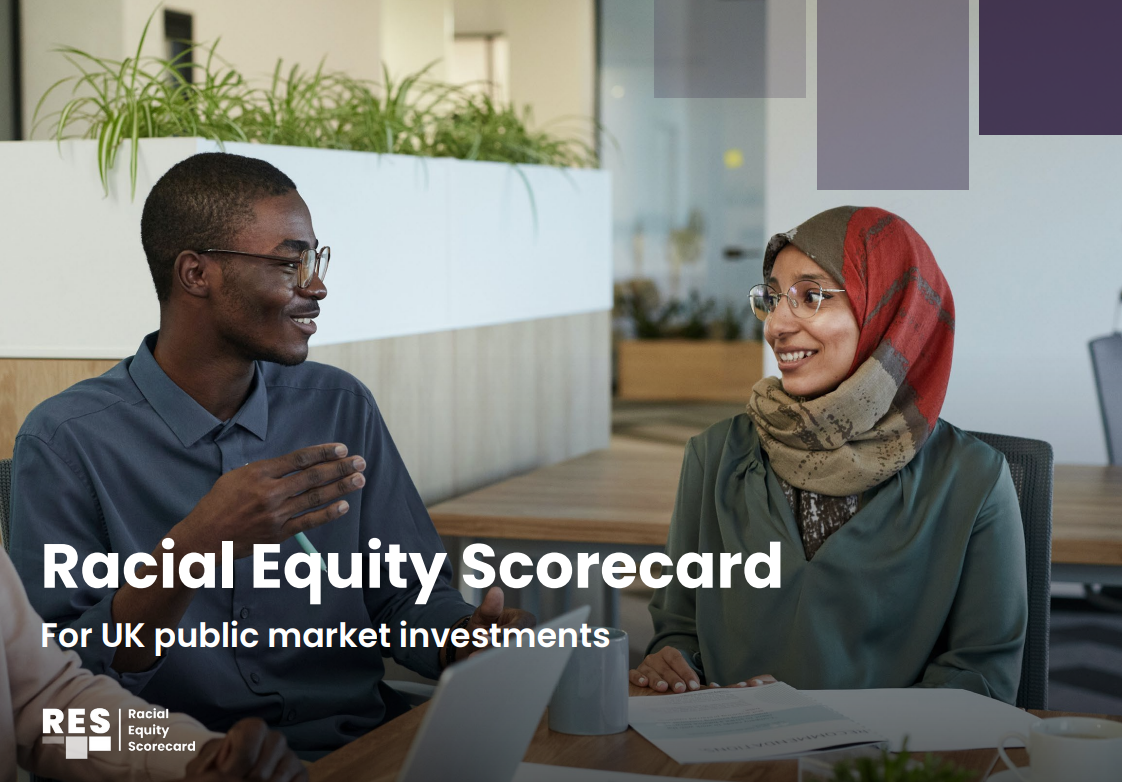
Two years ago, a few of us created the Racial Equity Scorecard in the UK to help investors think more rigorously about how capital interacts with racial inequality. The intention was practical: if we can measure and assess behaviour towards racial equity among listed companies, perhaps we can begin to shift it.
The response was thoughtful and encouraging. There was genuine interest, serious conversations, and a sense that the time was right.
We were particularly interested in supporting philanthropic endowments to adopt it. Many of them invest in public equities, and many are also committed to racial equity and justice.
And yet, two years on, very few institutions have formally adopted it or allocated funding to develop it further. I have spent a lot of time reflecting on why.
It would be easy to frame this as reluctance or resistance. But I think the reality is more complex. And I do not think the issue is a failure of the tool itself.
Through conversations with trusts and foundations, high net worth individuals, and fund managers, it has become increasingly clear to me that public equities are only one part of the picture. Our Scorecard focuses on listed markets, but much of the most aggressive wealth extraction, and much of the greatest opportunity for wealth creation, sits in private markets.
That creates an uncomfortable tension. Engaging public companies on racial equity may feel like progress, but if a foundation’s private market portfolio is simultaneously extracting wealth from marginalised communities, then the work risks feeling partial. I think many institutions understand this tension instinctively. The challenge is that addressing it would require looking more closely at the architecture of the portfolio itself.
What the Scorecard touches is not simply a technical question about metrics. It opens up deeper questions about what endowments are for, how they understand risk, and how far institutions are prepared to connect their social missions to their capital.
Those questions take time. But I hope we are now reaching a moment where intention can begin to move toward action.
Things we have missed
Reflecting on the past two years, there are things we have missed. Or perhaps more accurately, things we have not yet explored deeply enough.
The first is around language and conceptual grounding. The Scorecard uses the language of “racial equity.” For some, that language feels pragmatic and actionable. For others, it does not go far enough.
Equity can imply improved outcomes within existing systems. Justice suggests something more transformative, including redistribution, repair, and structural change. I do not think we have fully articulated how we see equity as a bridge to justice, or whether equity can sometimes create the appearance of progress without addressing deeper structures. We have not engaged deeply enough with that tension.
The second is around the financial realities facing endowments. Endowment decisions are shaped by fiduciary interpretations, peer benchmarking, liquidity needs, and perpetuity thinking. These structures are not inherently hostile to racial equity, but they were not designed with it in mind.
So when we introduce a racial equity lens into investment portfolios, we are not simply adding another screen. We are asking institutions to reconsider how capital preservation, return expectations, and mission alignment interact. That becomes a much larger conversation about the architecture of the endowment itself.
The third is around asset classes.
Public markets are often the starting point. Assessing workforce equity, leadership representation, supply chains, and shareholder engagement is important work. But if we stop there, the picture remains incomplete.
For many foundations, the largest allocations sit elsewhere. Private equity, venture capital, real assets, and private debt often play a much more significant role in shaping how wealth is created and distributed. I think this is part of the reason the Scorecard has had limited formal adoption. Focusing on public markets alone can begin to feel insufficient if the rest of the portfolio remains unexamined.
A more serious engagement with racial equity may therefore require looking across the full balance sheet.
Case in point: Pathway Fund
At Pathway Fund, we have been exploring how racial equity might be applied across asset classes, not only within listed equities.
I should be careful here. I am not presenting this as settled thinking. The work is still emerging, and the emphasis is very much on execution rather than theory. The intention is to build and test practical approaches to deploying capital in ways that can shift outcomes while maintaining financial discipline.
One example is our decision to challenge the perpetuity constraint directly by designing a proposed £50 million endowment as a 25 year spend down fund.
By deploying the entire capital base over a defined horizon, the focus shifts toward intergenerational wealth building and social mobility without the structural friction of preserving capital indefinitely.
Some of the areas we have been exploring include the following.
Housing and real assets
Racial inequality in the UK is deeply entangled with housing. Who rents, who owns, who builds wealth through property, and who bears the costs of poor quality housing and energy inefficiency are all shaped by long standing patterns of exclusion.
Investing in social and affordable housing in geographies with higher concentrations of Black and minoritised communities, or supporting mortgage access for those historically excluded from home ownership, can contribute to community wealth building.
Endowments can also support models that embed permanent affordability. Trust Neighborhoods, for example, is creating permanently affordable housing through community ownership, while Apis and Heritage focuses on acquiring businesses and transitioning them to employee ownership.
Venture capital and private equity
Access to venture capital remains deeply uneven. Representation at the asset allocator and fund manager level continues to shape which founders receive backing and which ideas are able to scale.
Supporting emerging fund managers, employee ownership models, and first time founders is one way to begin addressing that imbalance. For example, incubating and writing anchor tickets into first time funds led by diverse managers can provide the early validation needed to unlock larger institutional capital.
Debt and SME finance
Access to debt finance also plays a critical role in determining who is able to start and grow businesses. If certain communities are more likely to be rejected for loans, then debt markets inevitably become part of the racial justice conversation.
Community development finance, inclusive fintech, and mission aligned lending can expand economic participation. Institutions such as Hope Credit Union in the United States have demonstrated that deploying capital into communities often overlooked by traditional finance can generate meaningful returns while strengthening local economies.
One structure under exploration is catalytic subordinated debt. Accepting a 4 to 5 percent yield in a junior position can create a first loss cushion for community development financial institutions. This in turn can make it commercially viable for mainstream banks such as Lloyds or NatWest to provide larger senior debt tranches, allowing these models to scale.
I mention these examples not to suggest a single solution, but to illustrate that credible, racially equitable investment routes already exist across multiple asset classes.
The next frontier for racial equity investing
Beyond asset allocation, I also think racial equity investing is evolving to consider a wider set of questions.
As I have continued to reflect on racial justice, it has become increasingly clear to me that a purely domestic frame is insufficient. We already began laying some of the groundwork for this in the Scorecard, particularly in thinking about historical responsibility and supply chains.
Race and migration are deeply intertwined. Labour mobility, border regimes, remittance flows, and climate displacement all shape who experiences stability and who lives with precarity.
If an endowment takes racial justice seriously, it may eventually need to consider questions such as:
• How supply chains depend on migrant labour
• How climate transition interacts with displacement
• How sovereign debt burdens affect formerly colonised nations
This is where the conversation becomes more challenging.
Many endowments hold sovereign bonds issued by countries whose fiscal constraints are shaped by histories of extraction and unequal trade. At the same time, holding sovereign debt could potentially be used as a mechanism for creating positive impact, in much the same way that holding shares in companies can create opportunities for influence.
I do not raise this to suggest easy answers. Rather, to acknowledge that racial equity, if understood globally, inevitably intersects with debt justice and the origins of wealth.
From tool to thesis
Perhaps what the past two years have revealed is that the work is not only technical. It is also cultural.
It involves how trustees understand risk, how consultants frame options, how organisations reconcile perpetuity with justice, and how comfortable institutions are interrogating the origins and effects of wealth.
It may be that the Scorecard arrived at a moment of intention, but before institutions were ready for the architectural implications.
It is relatively easy to use a scorecard to demand transparency from a public company. It is much harder to look at a foundation’s own balance sheet and recognise that a significant portion of its capital may be embedded in assets that actively dismantle the communities its grants are trying to support.
The central question, what does racial equity and justice really mean for an endowment, therefore remains very much alive.
If anything, it is becoming more complex. Racial equity increasingly intersects with climate justice, migrant justice, and debt justice. It raises deeper questions about extraction, ownership, and historical responsibility.
What would it take, practically, culturally, and financially, for endowments to explore these questions without defensiveness?
How do we create space for experimentation without demanding perfection?
And how do we ensure that racial justice is not confined to the grant portfolio, but slowly, thoughtfully, and credibly embedded in how capital itself is stewarded?
There are no simple answers. But perhaps the shift is this. Moving from seeing alignment as a declaration to understanding it as an ongoing practice.
The work is slower than I once hoped. But the conversation feels deeper than it once was, and maybe that is where real change begins.